Building or Developing Near Water - Jackson County, Oregon

Can I build or develop near a river or stream?
Short answer: It’s limited—and often requires approval.
- New development near a river, creek, stream, pond, and/or wetland area is restricted
- Buildings must be set back from rivers, creeks, streams, ponds, and/or wetlands
- Ground disturbance is limited
- Most activities require County review and approval
These rules apply to properties near rivers and streams in unincorporated Jackson County.
Common Questions
Usually no. New buildings within riparian areas are restricted unless specifically approved through County review.
Expansion closer to a river or stream is not allowed without approval. Any expansion must avoid additional impacts and may require review.
Possibly. Replacement of an existing structure in the same location may be allowed with County approval, as long as no additional riparian area is disturbed.
Not without approval. Ground disturbance is limited in riparian areas and requires County review.
Possibly, but only at approved locations and with designs that minimize impacts to streams and fish habitat.
Yes. Floodplain regulations may apply in addition to riparian rules, depending on your property.
What is a riparian area?

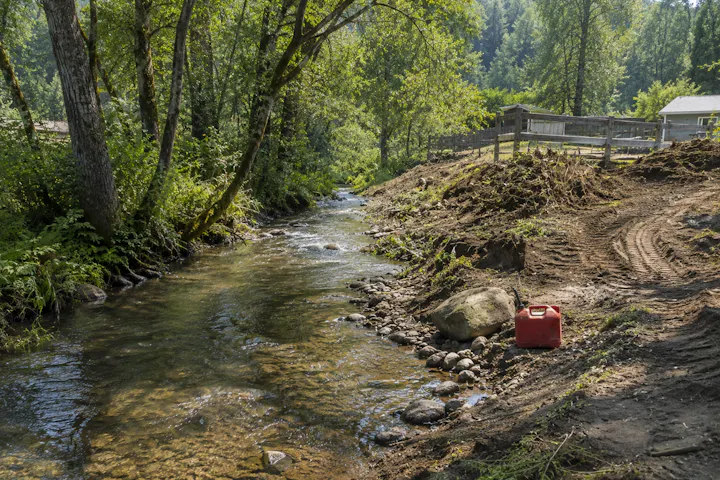
A riparian area is the protected land next to a river, creek, stream, pond, and/or wetland.
In Jackson County, riparian areas are measured from the top of the bank:
- Rogue River: 75 feet
- Streams: 50 feet
These areas include:
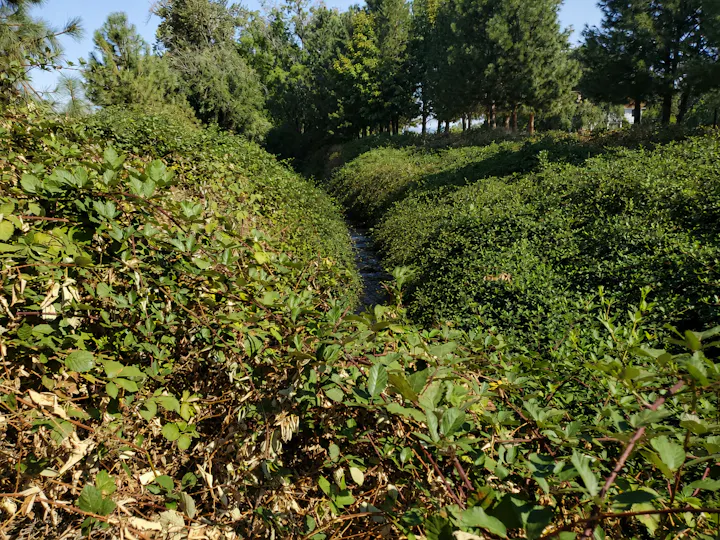
- Tree canopy
- Shrubs and understory plants
- Groundcover and root systems
They are protected because vegetation:
- Shades and cools the water
- Prevents erosion
- Filters runoff
- Provides habitat for fish and wildlife
Rules and Limitations
- New development is restricted
- Structures must be set back from rivers and streams
- Ground disturbance must be minimized
- Impacts to vegetation and streambanks must be avoided
These rules are designed to reduce flood risk, erosion, and damage to property and infrastructure.
- Lawfully existing structures may remain
- Includes homes, buildings, and driveways
However:
- Structures cannot be expanded closer to the stream without approval
- Replacement or modification may require review
- Vegetation protection rules still apply
Existing development does not create a right to new or expanded impacts.
- New buildings or structures in riparian areas
- Expanding structures closer to rivers or streams
- Grading, filling, or excavating soil
- Placing fill, gravel, or construction materials near water
- Adding paved or impervious surfaces
- Straightening, piping, or altering stream channels
These activities can increase erosion, flood damage, and habitat impacts.
These activities may be permitted thorugh an approval process.
- Replacement of existing structures
- Approved road or driveway crossings
- Utilities, drainage facilities, or irrigation pumps
- Water-dependent or water-related uses
All approved activities must:
- Minimize disturbance
- Restore impacted areas
- Meet County, state, and federal requirements
An approved project plan is required.
- Road and driveways should avoid riparian areas whenever possible
- Must be located at approved crossing points
- Must be designed to reduce impacts to streams and fish
- Disturbed areas must be stabilized and replanted
Some projects may also require floodplain review or additional permits.
A setback is a required distance between a stream, river, wetland, or riparian area and certain types of development, construction, vegetation removal, or ground disturbance. Setbacks are included in some local ordinances to help protect streambanks, water quality, floodplain function, habitat, and riparian vegetation.
Setbacks are often measured from the “top of bank,” which generally means the upper edge of a streambank where the slope begins to level out. Top of bank is not always easy to identify, especially where banks are gradual, vegetated, eroded, modified, or affected by seasonal flows.
If you have questions about identifying top of bank or understanding setbacks near water, contact JSWCD. We are not a regulatory agency, but we can help you understand where to start and who to contact.
May be allowed only in limited cases when:
- The property would otherwise be unbuildable, and
- Equal or better protection is provided through mitigation
Requires:
- County approval
- Detailed plans
- ODFW review
Simple wire fencing is generally considered low impact. However:
- Vegetation removal to install fencing may require County approval
- Ground disturbance may require review
- Fencing should not block flood flows or damage streambanks
Property owners are encouraged to contact the County before installing fencing in riparian areas.
Why do different agencies get involved in riparian reviews?
Riparian areas are protected by multiple layers of regulation.
Each agency has a different role:
-
Jackson County
- Reviews land use applications and makes decisions on development, setbacks, and allowable activities.
-
Oregon Department of Fish and Wildlife (ODFW)
- Reviews and approves habitat protection and riparian vegetation or restoration plans to protect fish and wildlife.
-
Jackson Soil & Water Conservation District (JSWCD)
- Provides technical assistance only, such as:
- Explaining riparian concepts
- Helping with vegetation management strategies
- Assisting with restoration or planting plans
- Provides technical assistance only, such as:
JSWCD does not issue permits or make regulatory determinations.
View the Full Ordinance
This page is a simplified guide to help explain common rules and requirements near rivers and streams. For complete legal language and official regulations, view the full ordinance below.