Managing Vegetation Near Water – City of Rogue River
Can I remove or manage vegetation near a river, creek, stream, pond, and/or wetland?
Short answer: Usually no—unless it’s approved.
- Trees, shrubs, and native vegetation must be kept in place
- Removing vegetation requires City approval
- When removal is allowed, native plants must be replanted
These rules apply to properties within the City of Rogue River near rivers, creeks, streams, ponds, and/or wetlands.
Common Questions
Yes—but City approval is required before removal, and native plants must be replanted afterward.
Limited mowing may be allowed near the outer edge of the riparian area for fire safety, but mowing close to the water is restricted.
Yes, if it poses an obvious safety risk.
- City approval is required before removal (except emergencies)
- Trees must generally be replaced with native species
- Replacement is typically required at a 3:1 ratio
No. Lawn areas cannot be expanded into riparian areas.
Yes. These rules stay with the land, even when ownership changes.
Some vegetation and landscaping existed before the rules took effect in 2021 and may remain.
However, new removal or disturbance is regulated.
Yes, routine maintenance is allowed if:
- Lawn areas are not expanded
- Healthy trees are not removed
- Impacts to the stream are not increased
Any new disturbance beyond basic maintenance requires City review.
What is a riparian area?
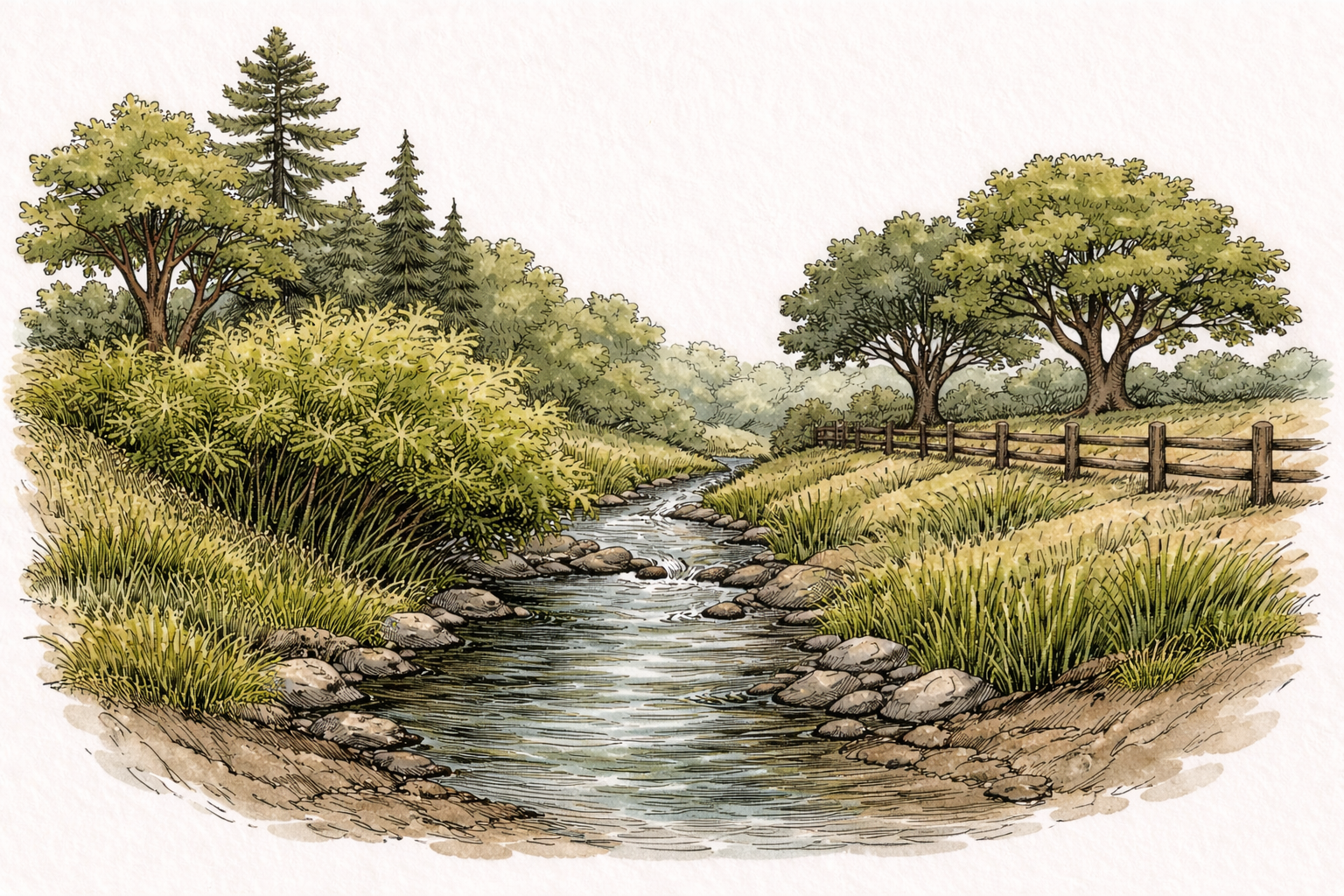
A riparian area is the protected land next to a river, creek, stream, pond, and/or wetland.
In the City of Rogue River, riparian areas are measured from the top of the bank:
In the City of Rogue River, riparian setbacks are measured from the top of the bank:
- Rogue River: 75 feet
- Streams (such as Evans Creek and Wards Creek): 50 feet
A setback is the required distance from a river or stream and where building or vegetation removal can occur. Setbacks are measured from the top of the bank and are used to protect water quality, reduce erosion, and preserve habitat.
These areas include:
- Tree canopy
- Shrubs and understory plants
- Groundcover and root systems
They are protected because vegetation:
- Shades and cools the water
- Prevents erosion
- Filters runoff
- Provides habitat for fish and wildlife
General Rule: Vegetation is protected.
Within riparian areas:
- Trees, shrubs, and understory vegetation must be retained
- Clearing or thinning vegetation is not allowed by default
- These protections apply regardless of past conditions
- Wildfire fuelbreak requirements do not override riparian protections
Vegetation Rules and Requirements
No—vegetation must be retained by default. Removal is only allowed in limited situations with City approval.
Yes—with limits.
Vegetation and landscaping that lawfully existed before August 21, 2021 may remain and be maintained.
However:
- Lawn areas cannot be expanded
- New vegetation removal requires City approval
- Maintenance must not damage streambanks or tree health
Only in limited situations and with City approval, such as:
- Removal of nonnative invasive plants
- Removal of hazardous or dangerous trees
- Approved restoration or landscaping activities
All removal must include replanting and erosion control.
Yes, when vegetation is removed or disturbed, native vegetation must be replanted and restoration is typically required.
JSWCD can assist with:
- Plant selection
- Restoration layout
- Erosion control strategies
Native vegetation must be replanted to stabilize soil, restore habitat, and prevent invasive species from returning.
A common rule of thumb:
- 1 native tree or shrub per 64 square feet removed
Actual requirements depend on site conditions and project goals.
Generally no—herbicides, pesticides, and fertilizers are prohibited unless specifically approved.
If approved:
- Must be used exactly as labeled
- Drift, overspray, and runoff into water are not allowed
- State and federal pesticide rules apply
Hiring a licensed applicator is strongly encouraged.
Unless specifically approved:
- Expanding lawn areas
- Dumping yard debris or compost
- Removing healthy trees without approval
- Applying herbicides or fertilizers without approval
- Clearing vegetation for wildfire fuelbreaks
- Placing fill or soil near the stream
Riparian vegetation cannot be removed to meet fuelbreak requirements.
Need help figuring this out?
You don’t have to navigate this alone. Contact us.
Jackson Soil & Water Conservation District (JSWCD) can help you:
- Understand where riparian areas may be on your property
- Plan vegetation management or restoration
- Explore options before starting a project
JSWCD provides guidance only and does not issue permits.
Permits and approvals are handled by:
- City of Rogue River
- Jackson County Development Services
- State of Oregon Wetlands and Waters
-
Oregon Department of Fish and Wildlife (ODFW)
- Habitat Review when required
See something concerning or have specific questions?
Understanding and Reporting Work Near Water - Jackson Soil and Water Conservation District
View the Full City Ordinance
This page is a simplified guide to help explain common rules and requirements near rivers and streams. For complete legal language and official regulations, view the full ordinance below.