Managing Vegetation Near Water - Jackson County, Oregon
Can I remove or manage vegetation near a river, creek, stream, pond, and/or wetland?

Short answer: Usually no—unless it’s approved.
- Trees, shrubs, and vegetation must be kept in place by default
- Removing vegetation, even blackberry, requires approval
- When removal is allowed, native plants must be replanted
These rules apply to properties near rivers, creeks, streams, ponds, and/or wetlands in Jackson County.
Let's start with your situation.
Common Questions:
Yes—but only with County approval, an approved restoration plan, and replanting with native vegetation
No, not without approval. Clearing or thinning vegetation is not allowed by default.
No. Expanding lawns into riparian areas is not allowed
Some conditions may have existed for many years, but new or ongoing vegetation removal is regulated under current rules.
Not necessarily. Restoration is generally required only when new disturbance occurs
Healthy riparian vegetation can help reduce wildfire risk by keeping soil moist, slowing fire spread, and creating a cooler, less flammable environment near water.
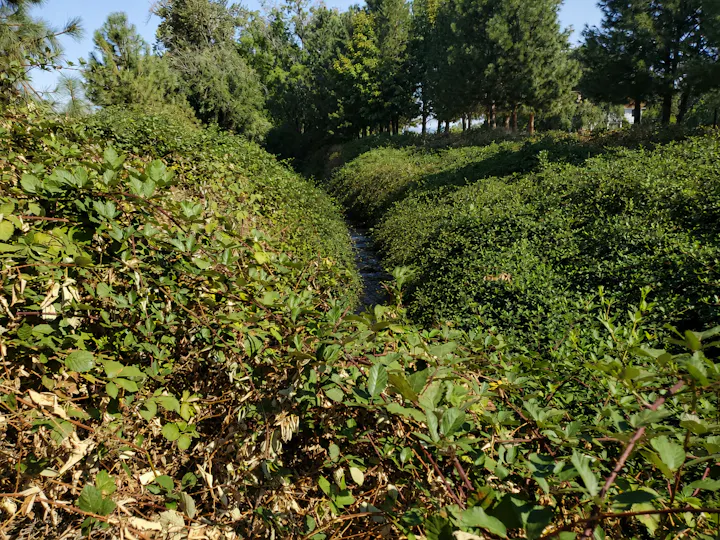
In contrast, dense, dry invasive plants—especially Himalayan blackberry—can increase wildfire risk by creating thick, continuous fuel that can carry fire quickly along stream corridors. Managing and replacing blackberry with native vegetation can improve long‑term fire resistance and habitat health.
However, both Jackson County and the City of Rogue River do not allow clearing riparian vegetation to create wildfire fuelbreaks. Instead, vegetation management focuses on improving plant health and stability and reducing invasive species presence, while strict wildfire protection must be addressed outside the riparian area or through limited activities such as perimeter mowing where allowed.
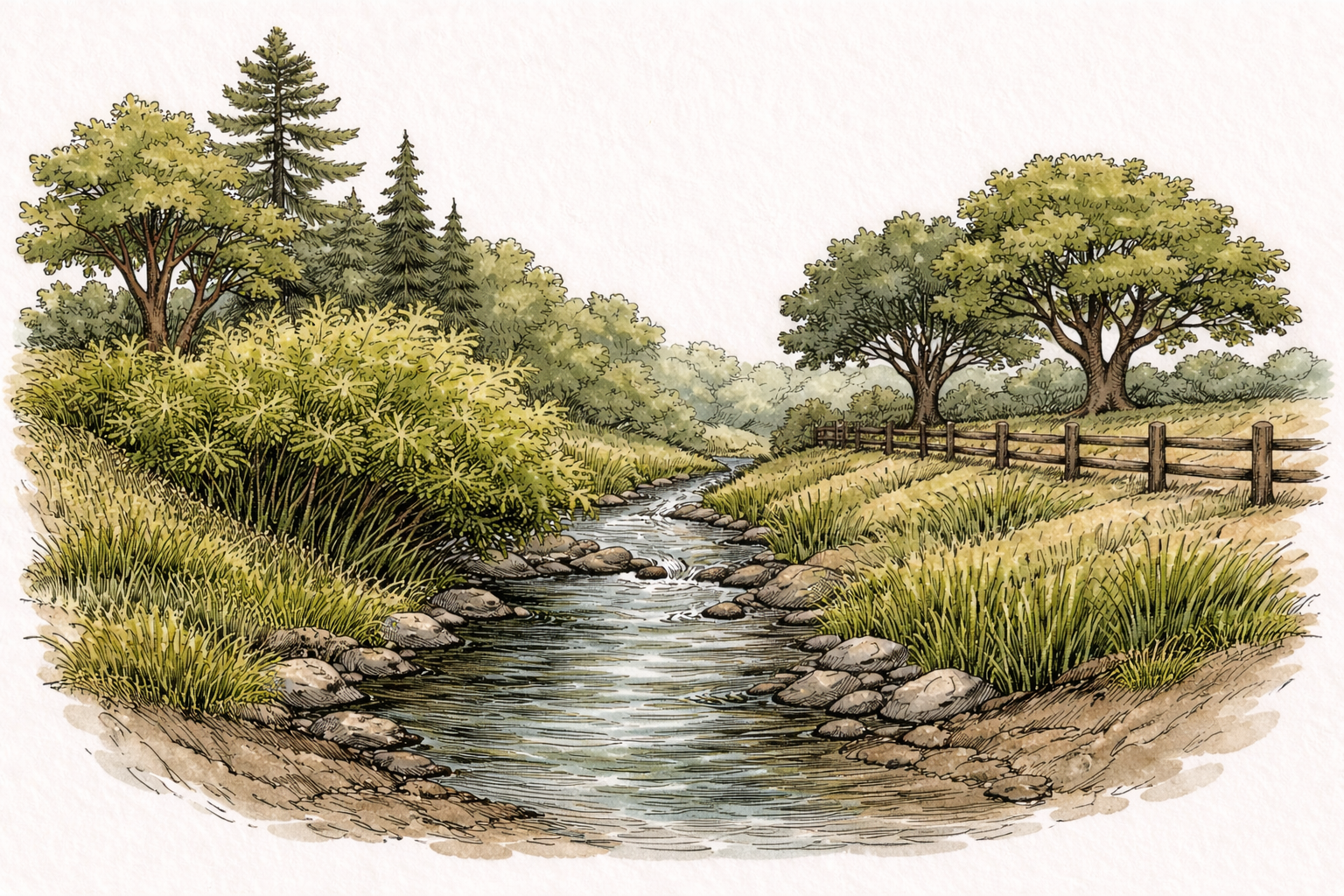
What is a riparian area?
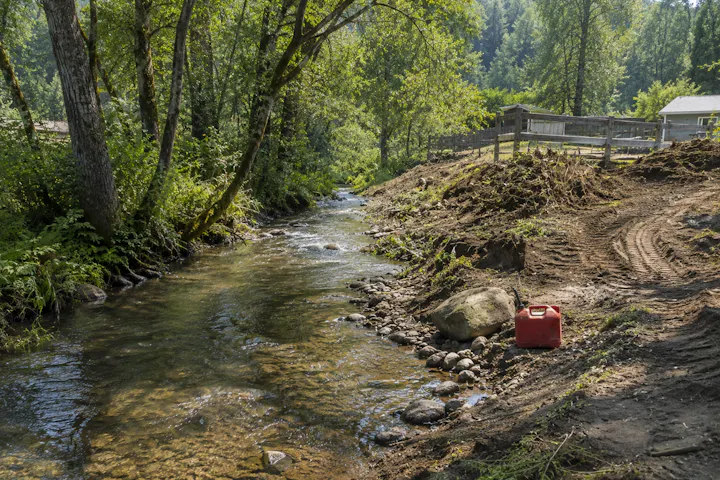
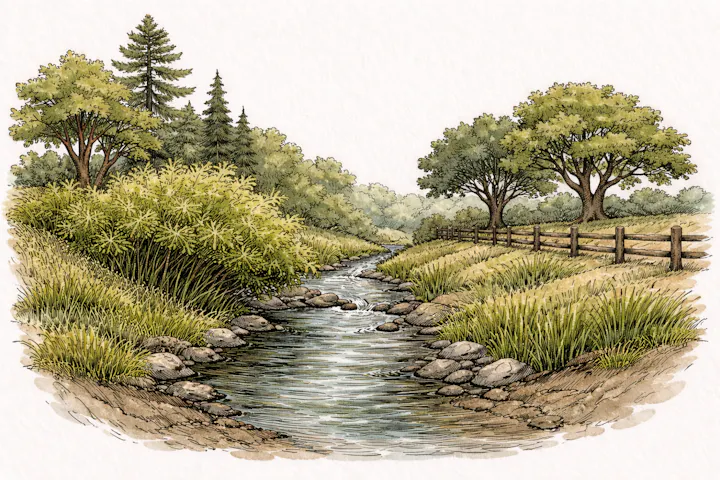
A riparian area is the protected land next to a river, creek, stream, pond, and/or wetland.
In Jackson County, riparian setback areas are measured from the top of the bank:
- Rogue River: 75 feet
- Streams: 50 feet
A setback is the required distance from a river or stream and where building or vegetation removal can occur. Setbacks are measured from the top of the bank and are used to protect water quality, reduce erosion, and preserve habitat.
These areas include:
- Tree canopy
- Shrubs and understory plants
- Groundcover and root systems
They are protected because vegetation:
- Shades and cools the water
- Prevents erosion
- Filters runoff
- Provides habitat for fish and wildlife
General Rule: Vegetation is protected.
Within riparian areas:
- Trees, shrubs, and understory vegetation must be retained
- Clearing or thinning vegetation is not allowed by default
- These protections apply regardless of past conditions
- Wildfire fuelbreak requirements do not override riparian protections
Vegetation Rules and Regulations
Vegetation removal is allowed only in limited situations and requires approval.
Invasive species removal
Allowed only if:
- Approved by the County
- Disturbed areas are replanted with native vegetation
- A riparian restoration plan is approved by Oregon Department of Fish and Wildlife (ODFW)
Water-dependent or water-related uses
Vegetation may be removed when necessary for approved uses, but only with:
- County approval
- ODFW-approved vegetation plan
- Restoration of disturbed areas
- Expanding lawns toward streams
- Clearing riparian vegetation
- Dumping yard debris or compost
- Removing healthy trees
- Applying herbicides
- Clearing vegetation for wildfire fuelbreaks
- Placing soil, gravel, or fill near streams
No.
Herbicides are not automatically allowed in riparian areas.
If proposed:
- County approval is required
- ODFW review is required
- Products must be used exactly as labeled
- Drift or runoff into water is not allowed
Hiring a licensed applicator is strongly recommended.
Not exactly.
Jackson County does not use a specific date to “grandfather” vegetation the way some cities do. Instead, the rules focus on what you do now and going forward.
Existing lawns or landscaping can usually remain as they are today. You are not required to remove a lawn or replant everything just because the rules exist
However:
You cannot expand a lawn closer to the stream. You cannot clear additional vegetation.
If you remove plants (including blackberry), you must follow current rules, which usually require approval and native replanting
What this means in practice.
If you already have a lawn near the creek, you can usually keep maintaining it—but you cannot make it bigger or remove new vegetation without approval.
The rules apply to:
- New work
- Changes to existing conditions
- Vegetation removal or disturbance
They do not usually require undoing older conditions unless new work is done.
Jackson County does not have a set “grandfather” date for vegetation. Existing lawns or landscaping can usually stay as they are, but new clearing, expansion, or vegetation removal must follow current rules and may require approval and replanting.
Yes.
When vegetation is removed or disturbed, a restoration plan is required.
Plans typically include:
- Existing vegetation
- Areas of removal
- Native replanting plan
- Erosion control measures
JSWCD can help develop these plans as technical assistance.
1 native tree or shrub per 64 square feet of vegetation removed is a common rule of thumb used by ODFW.
This is guidance—not a fixed requirement.
Actual needs depend on site conditions and goals.
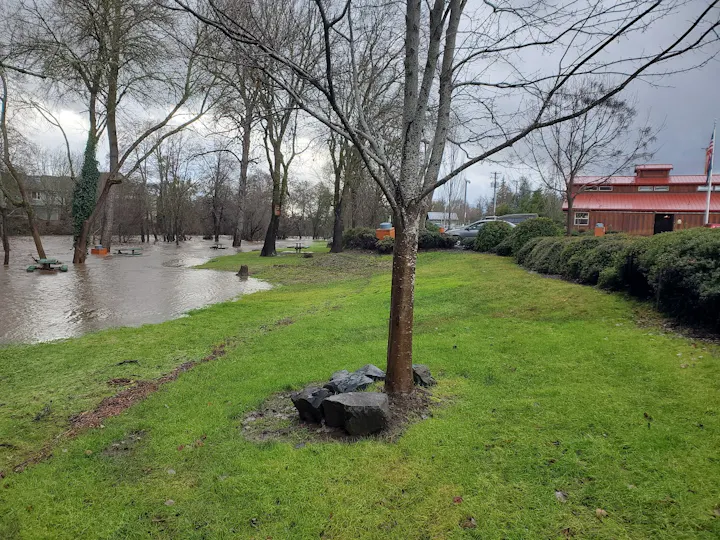
The top of the bank is the point where water in a river or stream usually stays within its channel before spilling out onto the land during higher flows.
You can often spot it by:
- A change in slope (where the steep bank becomes flatter)
- A change in soil or vegetation
- The upper edge of the stream channel
Both the City and County measure riparian setbacks from this point.
JSWCD can help with general guidance to help you determine top of bank, but the City or County determines the official location for development projects.
Need help figuring this out?
You don’t have to navigate this alone. Contact us.
Jackson Soil & Water Conservation District (JSWCD) can help you:
- Understand where riparian areas may be on your property
- Plan vegetation management or restoration
- Explore options before starting a project
JSWCD provides guidance only and does not issue permits.
Permits and approvals are handled by:
- City of Rogue River
- Jackson County Development Services
- State of Oregon Wetlands and Waters
-
Oregon Department of Fish and Wildlife (ODFW)
- Habitat Review when required
See something concerning or have specific questions?
Understanding and Reporting Work Near Water - Jackson Soil and Water Conservation District
View the Full Ordinance
This page is a simplified guide to help explain common rules and requirements near rivers and streams. For complete legal language and official regulations, view the full ordinance below.